

An ankle sprain can make everyday activities such as walking, climbing stairs, and exercising uncomfortable. It occurs when the ligaments supporting the ankle stretch or tear due to a sudden twist, awkward landing, or accidental movement. While pain and swelling may improve with time, the ankle can remain weak or unstable without proper rehabilitation.
Knowing how to strengthen your ankle after a sprain is essential for restoring mobility, improving balance, and preventing future injuries. A combination of gentle exercises, stretching, strengthening activities, and physiotherapy can help you regain ankle strength and return to your normal routine safely.
Why Is Ankle Strength Important After a Sprain?
An ankle sprain can damage the ligaments that stabilise the ankle joint. Even after the initial pain and swelling decrease, the surrounding muscles may become weak due to reduced movement and activity.
Strengthening your ankle after a sprain helps to:
- Improve ankle stability and joint support.
- Restore flexibility and range of motion.
- Strengthen the muscles surrounding the ankle.
- Improve balance and coordination.
- Reduce the risk of repeated ankle sprains.
- Support a safe return to walking, running, and sports activities.
Without proper rehabilitation, an injured ankle may remain unstable, increasing the chances of another sprain.
7 Exercises to Strengthen Your Ankle After a Sprain
Once the initial pain and swelling have settled and your healthcare professional confirms that exercise is appropriate, you can gradually introduce ankle-strengthening exercises.
Here are seven effective exercises that can support ankle recovery.
1. Ankle Circles
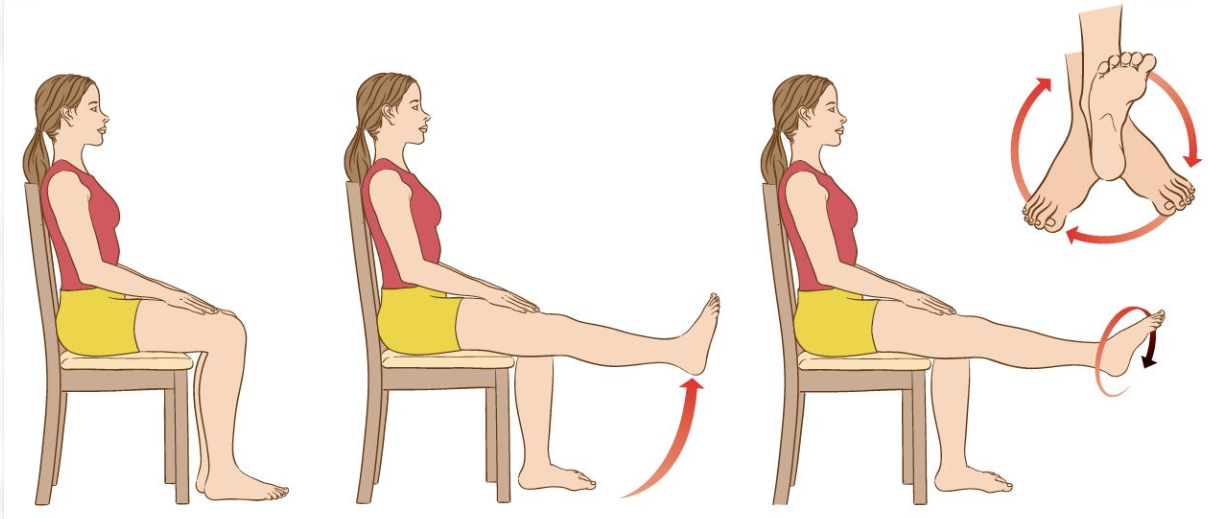
Ankle Circles
Ankle circles help improve joint mobility and reduce stiffness after an injury.
How to perform:
- Sit comfortably with your leg extended.
- Slowly rotate your ankle clockwise.
- Complete 10 circles in one direction.
- Repeat the movement anticlockwise.
- Perform 2–3 sets as tolerated.
Keep the movement controlled and avoid forcing your ankle into painful positions.
2. Resistance Band Exercises
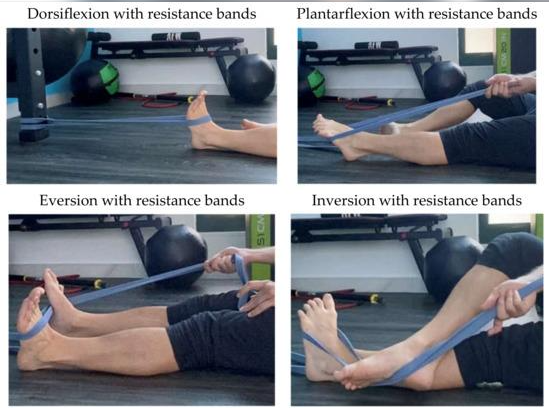
Resistance band exercises strengthen the muscles responsible for controlling ankle movements.
How to perform:
- Sit on the floor with your injured leg extended.
- Place a resistance band around the ball of your foot.
- Gently push your foot forward against the resistance.
- Slowly bring your foot back towards you.
- Repeat 10–15 times.
As your strength improves, you can introduce inward and outward ankle movements.
3. Calf Raises
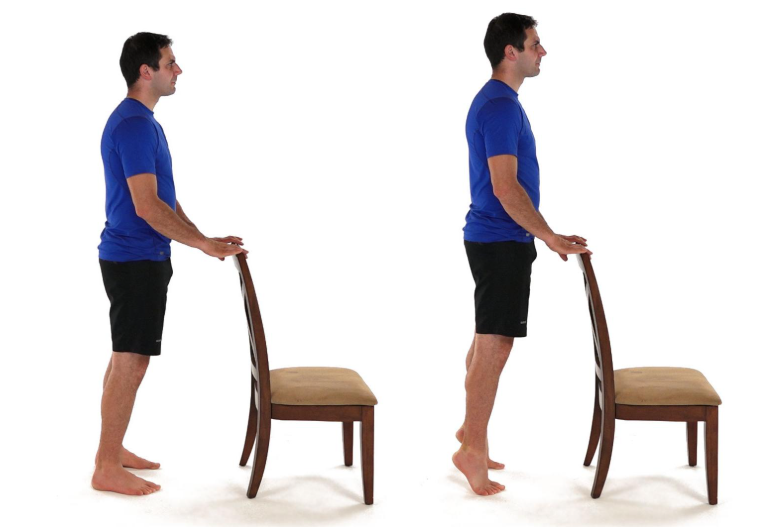
Calf raises strengthen the calf muscles and improve ankle stability during walking and other daily activities.
How to perform:
- Stand upright while holding a stable chair or support.
- Keep your feet hip-width apart.
- Slowly lift your heels off the ground.
- Hold the position for 2–3 seconds.
- Lower your heels gradually.
Start with 8–10 repetitions and increase gradually as your ankle becomes stronger.
4. Single-Leg Balance

Balance exercises improve coordination and help the ankle respond to sudden changes in movement.
How to perform:
- Stand near a wall or sturdy support.
- Lift your uninjured foot slightly off the floor.
- Balance on your injured leg.
- Hold for 10–20 seconds.
- Repeat 3–5 times.
Begin with support if necessary. Attempt this exercise only when you can comfortably bear weight on the injured ankle.
5. Towel Stretch
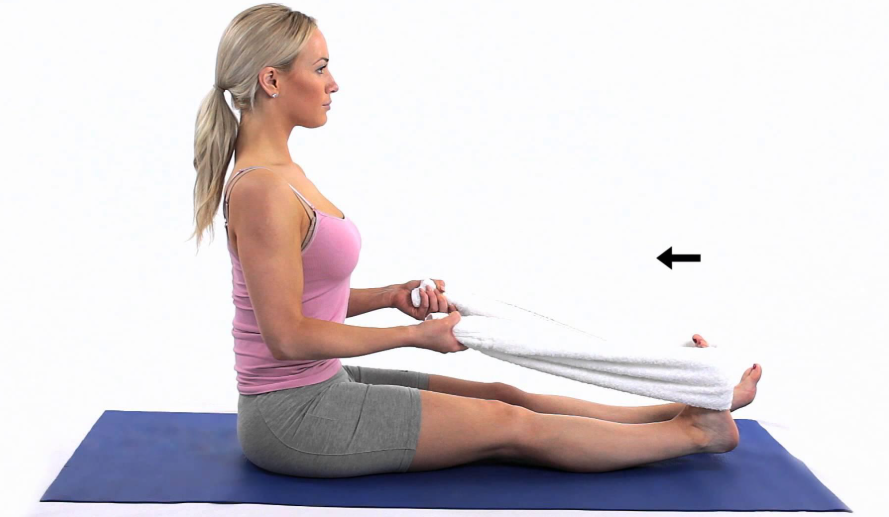
This exercise stretches the calf muscles and helps improve ankle flexibility.
How to perform:
- Sit with your injured leg extended.
- Wrap a towel around the ball of your foot.
- Gently pull the towel towards your body.
- Hold the stretch for 15–30 seconds.
- Repeat 3 times.
Avoid bouncing or pulling too hard.
6. Heel Walking and Toe Walking
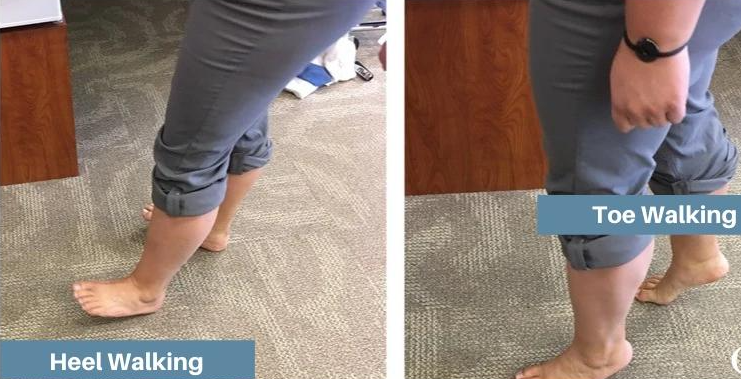
These exercises activate different muscles around the ankle and improve control during walking.
How to perform:
- Walk slowly on your heels for a short distance.
- Return to the starting position.
- Next, walk on your toes.
- Repeat each movement for 10–15 steps.
Start with short distances and use support if needed.
7. Step-Ups
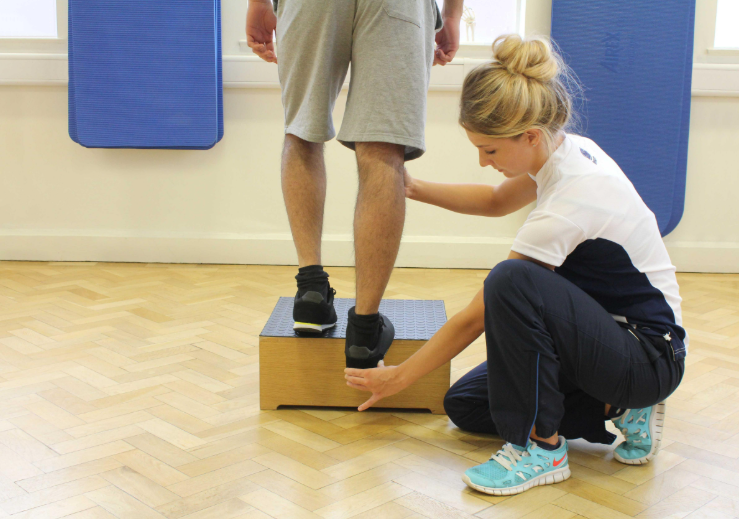
Step-ups help rebuild functional ankle strength and prepare you for everyday movements such as climbing stairs.
How to perform:
- Stand in front of a low, stable step.
- Place your injured foot on the step.
- Slowly step up while maintaining balance.
- Step down carefully.
- Repeat 8–10 times.
Introduce this exercise only when walking and weight-bearing are comfortable.
Tips to Recover Faster After an Ankle Sprain
Along with strengthening exercises, following appropriate recovery practices can help restore ankle function.
1. Protect your ankle: Avoid activities that cause pain or put excessive pressure on the injured joint.
2. Manage swelling: Apply an ice pack wrapped in a towel for short periods to help manage pain and swelling. Avoid applying ice directly to the skin.
3. Use appropriate support: An ankle brace or compression support may help stabilise the joint during recovery, depending on your injury.
4. Increase activity gradually: Avoid returning to running, jumping, or sports before regaining adequate strength and balance.
5. Follow physiotherapy: A physiotherapist can create an individualised rehabilitation programme based on your injury and recovery progress.
If you want to understand the recovery process in more detail, read our guide on how to recover from a sprained ankle.
How Can Physiotherapy Help Strengthen Your Ankle After a Sprain?
Physiotherapy plays an important role in ankle rehabilitation. A physiotherapist evaluates your ankle strength, flexibility, balance, mobility, and stability before recommending suitable exercises.
A personalised physiotherapy programme may include:
- Mobility exercises to restore ankle movement.
- Resistance training to strengthen supporting muscles.
- Balance training to improve joint stability.
- Gait training to improve walking patterns.
- Functional exercises to prepare you for daily activities and sports.
If your ankle continues to feel unstable or painful, professional assessment is important. You can also learn how to avoid ankle pain while running to understand how proper movement and conditioning can protect your ankles during physical activity.
How to Prevent Another Ankle Sprain
Once your ankle becomes stronger, maintaining its stability is important to avoid repeated injuries.
Follow these preventive measures:
- Perform ankle-strengthening exercises regularly.
- Warm up before physical activities and sports.
- Wear comfortable footwear with proper support.
- Avoid running on uneven surfaces when possible.
- Improve balance and coordination through regular training.
- Increase exercise intensity gradually.
- Do not ignore recurring ankle pain or instability.
If you experience repeated ankle injuries, consult a physiotherapist to identify the underlying weakness or movement problem.
Conclusion
Strengthening your ankle after a sprain requires patience, consistency, and the right rehabilitation approach. Exercises such as ankle circles, resistance band movements, calf raises, single-leg balance, and step-ups can help restore strength, flexibility, and stability.
However, the right exercises and their intensity depend on the severity of your injury and your recovery stage. Working with a qualified physiotherapist can help you recover safely, regain confidence in movement, and reduce the risk of future ankle sprains.


