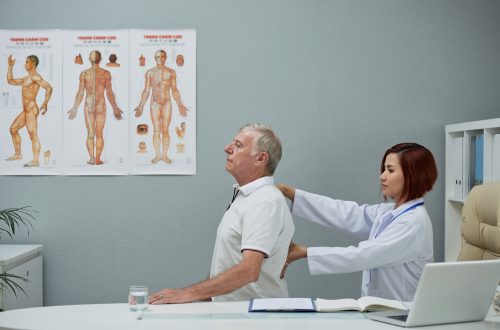

If you have ever received a chiropractic adjustment, you may have heard a sudden “pop” or “crack” coming from your back or neck. For some people, the sound can feel surprising or even concerning. You may wonder whether something is breaking, whether the adjustment is actually working, or if the cracking sound is harmful.
The good news is that the cracking sound heard during a chiropractic adjustment is generally not a bone breaking or a joint being damaged. In most cases, the sound comes from changes in pressure within a joint.
Chiropractic adjustments are performed using controlled movements to improve joint mobility and reduce restrictions. However, the sound itself is not necessarily an indication that the treatment has worked.
What Causes the Cracking Sound During Chiropractic Treatment?
The cracking or popping sound is commonly associated with a phenomenon called cavitation.
Your joints contain a small amount of fluid called synovial fluid. This fluid helps lubricate the joint and allows the joint surfaces to move smoothly. When a chiropractor applies a quick, controlled force to a joint, the joint surfaces can move apart slightly.
This creates a rapid change in pressure inside the joint. Gases that are dissolved in the synovial fluid can form a cavity, producing the familiar popping or cracking sound.
This process is similar to the sound you hear when cracking your knuckles.
Importantly, the sound does not mean that bones are grinding against each other or that something is being broken.
Does Every Chiropractic Adjustment Make a Cracking Sound?
No. A chiropractic adjustment does not have to produce a cracking sound to be effective.
Different chiropractic techniques use different types of pressure and movement. Some techniques involve a quick, controlled thrust, while others use slower movements, instruments, or gentle mobilization.
As a result, you may hear a pop during one adjustment but not during another.
The goal of chiropractic treatment is generally to improve movement and function of the musculoskeletal system not to produce a cracking sound.
If you’re new to chiropractic care, understanding [what is chiropractic treatment] can help you know what an appointment may involve and why different techniques may be used.
Is Chiropractic Cracking Safe?
For many healthy adults, appropriately performed chiropractic adjustments are considered generally safe when provided by a qualified professional. Temporary effects such as mild soreness, stiffness, or discomfort can occur after treatment and usually resolve relatively quickly.
However, chiropractic treatment is not appropriate for everyone. Certain medical conditions, injuries, or other risk factors may require additional assessment or an alternative approach.
This is particularly important when treatment involves the neck. People should not attempt to forcefully crack their own neck or have someone without appropriate training manipulate it.
A qualified practitioner should first assess your symptoms, medical history, mobility, and overall condition before deciding whether an adjustment is appropriate.
Does the Cracking Sound Mean Your Spine Is Being Realigned?
Not necessarily.
One common misconception is that the cracking sound means that a vertebra has “gone out of place” and has been pushed back into position. In most cases, the sound itself does not prove that a bone has moved back into a particular position.
Chiropractic adjustments are better understood in terms of joint movement, mobility, and mechanical function rather than simply putting bones back into place.
The improvement someone experiences after an adjustment may involve several factors, including changes in joint movement, muscle tension, pain sensitivity, and the nervous system.
Therefore, a cracking sound should not be used as the only measure of whether treatment was successful.
Why Do Some People Feel Better After an Adjustment?
Some people report feeling less stiffness or discomfort and having better movement after chiropractic treatment.
An adjustment can provide a mechanical stimulus to a joint and surrounding tissues. This may influence muscle activity, joint movement, and how the nervous system processes pain.
However, the response varies from person to person. Chiropractic care is also only one potential approach for musculoskeletal problems.
For example, people experiencing neck discomfort may benefit from a broader treatment plan involving exercise, posture changes, manual therapy, and other appropriate interventions. You can also learn more about [how to reduce neck pain] for practical strategies that may complement professional care.
Is It Bad to Crack Your Joints Frequently?
Occasionally cracking a joint is not necessarily harmful. However, repeatedly or forcefully manipulating your joints especially your neck without understanding the underlying cause of pain is not recommended.
If you feel that you constantly need to crack your back or neck because of stiffness or discomfort, it may be more useful to identify why the stiffness is occurring rather than repeatedly producing the cracking sound.
Poor posture, prolonged sitting, muscle tightness, reduced mobility, repetitive activities, and previous injuries can all contribute to musculoskeletal discomfort.
If back discomfort is your main concern, understanding [how to reduce back pain] can provide additional information about lifestyle and movement strategies that may help.
When Should You See a Healthcare Professional?
A cracking sound by itself is usually not a reason for concern. However, you should seek professional evaluation if the sound is accompanied by significant or persistent pain, swelling, weakness, numbness, tingling, loss of movement, or symptoms that started after an injury.
Neck or back symptoms accompanied by serious neurological symptoms should receive prompt medical attention rather than being treated by repeated self-manipulation.
A professional can determine whether chiropractic treatment is suitable or whether another form of physiotherapy or medical care would be more appropriate.
Final Thoughts
The cracking sound during a chiropractic adjustment is usually caused by cavitation a rapid pressure change within a joint that can produce a popping sound. It is not the sound of bones breaking, and an adjustment does not need to produce a crack to be beneficial.
The most important part of chiropractic care is not the sound but the assessment, appropriate technique, and overall treatment plan. If you are considering chiropractic treatment, choose a qualified professional who can assess your condition and explain the approach before treatment.
Understanding what causes the sound can make chiropractic treatment feel much less mysterious. A crack may be noticeable, but it is only one small part of what happens during an adjustment.